
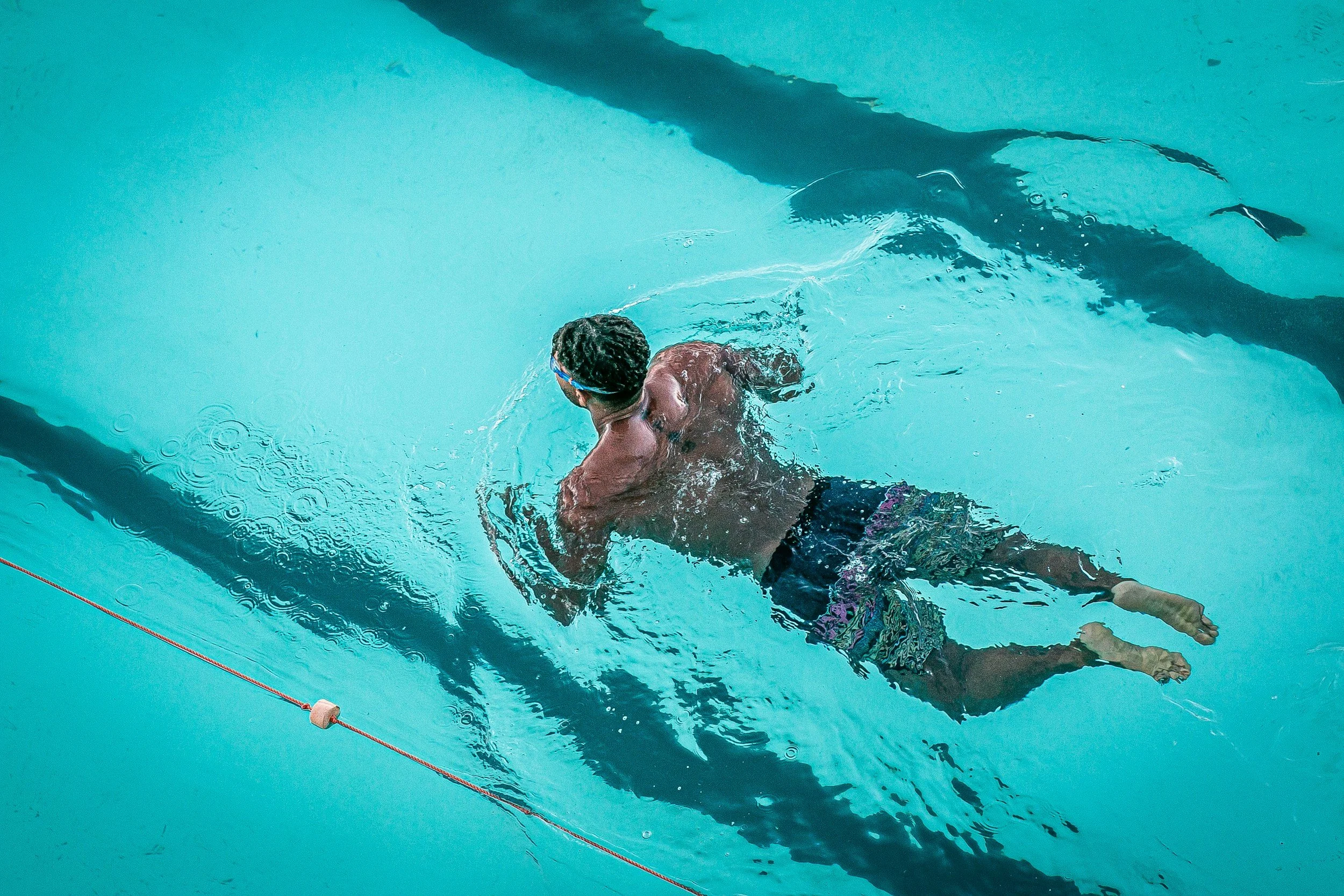
Swimming for better health and wellbeing
Swimming for better health and wellbeing
To swim for fitness and a healthier lifestyle, aim for consistency, progressive overload, and balanced nutrition. Below is a practical weekly plan, guidance on session length and intensity, meal recommendations to support training, and the key physical and mental benefits of swimming.
How often and how long per week
Beginners (new to regular exercise or returning after a break)
Frequency: 2–3 sessions per week.
Duration: 20–40 minutes per session (including warm-up and cool-down).
Total per week: 60–90 minutes.
Focus: build technique, aerobic base, and comfort in the water.
Intermediate (regular exercisers improving fitness)
Frequency: 3–4 sessions per week.
Duration: 30–50 minutes per session.
Total per week: 90–200 minutes.
Focus: mix steady aerobic swims with some technique drills and short interval sets.
Advanced (aiming for significant fitness gains or racing)
Frequency: 4–6 sessions per week.
Duration: 45–90 minutes per session.
Total per week: 200–400+ minutes.
Focus: structured programmes including endurance sets, speed intervals, threshold work and active recovery.
Guidelines for structuring sessions
Warm-up: 5–10 minutes of easy swimming or drills to raise heart rate and mobilise joints.
Main set: 15–60 minutes depending on level—steady continuous swims for aerobic development; interval sets (e.g. 8×100m with rest) for speed and VO2 improvements.
Cool-down: 5–10 minutes of easy swimming and stretching.
Intensity distribution: most sessions
Swimming is one of the most effective full-body forms of exercise, offering a unique combination of cardiovascular conditioning, muscular strength, mobility and low-impact rehabilitation. Its benefits extend across fitness goals, ages and abilities.
Cardiovascular health
Improves heart and lung function by elevating heart rate and promoting efficient oxygen use.
Lowers resting heart rate and reduces blood pressure over time.
Enhances circulation, lowering risk factors for heart disease and stroke.
Full-body muscle engagement
Every major muscle group is engaged—arms, shoulders, back, core, glutes and legs—creating balanced strength development.
Water resistance provides continuous, multi-directional load, improving muscular endurance and tone without heavy weights.
Different strokes emphasise different muscle groups: freestyle and backstroke for posterior chain and shoulders; breaststroke for adductors and chest; butterfly for upper-body power.
Low-impact, joint-friendly exercise
Water buoyancy reduces weight-bearing stress by up to 90%, making swimming suitable for people with arthritis, joint pain or mobility issues.
Minimises impact-related injury risk common in running or plyometrics, allowing higher training volumes with lower cumulative joint strain.
Calorie burn and weight management
Effective calorie expenditure: swimming burns significant energy relative to perceived exertion, helping with fat loss and metabolic health.
Interval and mixed-intensity sessions (sprints, drills, longer steady sets) allow precise control of energy systems targeted—anaerobic for speed, aerobic for endurance.
Flexibility and range of motion
The combination of pulling, kicking and rotation in strokes promotes mobility across shoulders, hips and spine.
Gentle aquatic stretching and resistance movements help maintain or improve flexibility without overloading tissues.
Rehabilitation and recovery
Ideal for post-injury or post-surgery rehabilitation due to low impact and adjustable resistance.
Active recovery sessions in the pool increase blood flow to muscles, accelerating repair and reducing delayed onset muscle soreness.
Neuromuscular coordination and posture
Stroke technique requires timing, balance and core stability, improving neuromuscular control.
Regular swimming promotes better postural alignment through strengthened back and shoulder stabilisers.
Mental health and cognitive benefits
Aerobic exercise in water releases endorphins and reduces stress, anxiety and depressive symptoms.
The rhythmic, meditative nature of laps can improve focus and mental clarity.
Social aspects of pool-based classes and clubs contribute to wellbeing and motivation.
Adaptability and lifespan activity
Suitable for all ages—from children learning fundamental movement patterns to older adults maintaining function and independence.
Easily modified for intensity: changing pace, stroke, lap distance, use of equipment (paddles, fins, pull buoys) or incorporating interval training.
Performance and cross-training advantages
Excellent cross-training for runners, cyclists and team-sport athletes to maintain cardiovascular fitness while reducing impact-related fatigue.
Improves breathing control and lung capacity—beneficial for many sports and activities.
Practical considerations for maximising benefit
Combine technique coaching with structured workouts to improve efficiency and reduce injury risk.
Vary strokes and intensities to balance muscle development and maintain engagement.
Include dryland strength and mobility work to complement aquatic training and address specific weaknesses.
Summary Swimming delivers comprehensive fitness benefits: cardiovascular endurance, muscular strength and endurance, flexibility, joint protection, rehabilitation potential and mental wellbeing. Its adaptability makes it an enduring, effective option for lifelong health and performance.

The Langelier Saturation Index (LSI)
The Langelier Saturation Index
The Langelier Saturation Index (LSI) is a long-established tool for assessing the tendency of water to precipitate or dissolve calcium carbonate (scale formation or corrosion). It was developed to help water chemists and engineers predict and control calcium carbonate stability in engineered water systems, including swimming pools, boilers, cooling towers and drinking-water supplies.
History
Origin: The Langelier Saturation Index was introduced by Wilfred Langelier, a chemist at the United States Public Health Service, in a 1936 paper. Langelier sought a practical, quantitative way to express whether water was likely to deposit calcium carbonate or to remain corrosive.
Context: In the early 20th century, scaling and corrosion posed major operational problems in municipal water systems and industrial equipment. Langelier’s work built on earlier understanding of carbonate chemistry and solubility equilibria to produce a simple index that could be applied using routine water analyses available at the time.
Adoption and evolution: The LSI quickly gained acceptance because it provides a straightforward single-number indicator of water’s carbonate saturation relative to calcium carbonate. Over time, practitioners developed related indices (for example, the Ryznar Stability Index and Puckorius Scaling Index) that address different practical concerns or use different empirical adjustments. For pool water specifically, LSI remains a common baseline tool to inform calcium hardness, alkalinity and pH management to minimise scale and corrosion risk.
What the LSI indicates
Positive LSI (> 0): Water is supersaturated with respect to calcium carbonate and has a tendency to precipitate scale (calcium carbonate deposition).
Negative LSI (< 0): Water is undersaturated and tends to be corrosive or will dissolve calcium carbonate from surfaces.
Near zero LSI (≈ 0): Water is approximately in equilibrium with calcium carbonate and is considered balanced regarding scale/corrosion tendency.
The Langelier Saturation Index (LSI) indicates whether water will precipitate, be in equilibrium with, or dissolve calcium carbonate. Calculate it using these steps:
Gather required measurements
Water temperature (°C)
pH (measured)
Total alkalinity (as CaCO3, mg/L or ppm)
Calcium hardness (as CaCO3, mg/L or ppm)
Total dissolved solids (TDS) or electrical conductivity (optional; used for more precise pKs)
Calculate the ionic strength correction factor (optional for high accuracy)
For most pool and spa water, this step may be simplified or omitted. If TDS (mg/L) is known, approximate ionic strength via TDS/1000. For typical pools use the simpler version below.
Compute the pHs (the pH at which water is saturated with CaCO3)
Use the standard empirical formula: pHs = (9.3 + A + B) − (C + D) Where: A = (log10[TDS] − 1)/10 B = −13.12 × log10(temperature in °C + 273) + 34.55 (sometimes folded into pKs term) C = log10[calcium hardness as CaCO3 in mg/L] − 0.4 D = log10[total alkalinity as CaCO3 in mg/L]
For practical pool calculations, a commonly used simplified form is: pHs ≈ (9.3 + A + B) − (log10[Calcium as CaCO3] + log10[Alkalinity] − 0.4)
If you prefer an easier route, many operators use a standard table or calculator to obtain pHs from temperature, TDS, calcium and alkalinity.
(Note: Different sources present slightly different coefficients; using a reputable pool chemistry reference or a digital calculator ensures accuracy.)
Calculate LSI
LSI = pH (measured) − pHs
Interpret the result
LSI < 0: Water is undersaturated with CaCO3 and tends to be corrosive (may dissolve calcium-bearing materials).
LSI = 0: Water is balanced; neither deposits nor dissolves CaCO3.
LSI > 0: Water is supersaturated and tends to precipitate calcium carbonate (scale formation).
Practical target for pools and spas
Aim for LSI between −0.3 and +0.3 for most pools. Many commercial pools target slightly positive values (around +0.1 to +0.3) to reduce corrosivity while controlling scale.
Adjusting water chemistry
To raise LSI (make water less corrosive/more scaling): increase pH, increase calcium hardness, increase alkalinity, or lower temperature/TDS.
To lower LSI (reduce scaling): lower pH, reduce calcium hardness (partial drain/refill), reduce alkalinity, or increase temperature/TDS depending on scenario.
Swimming Pool Troubleshooting:
Swimming Pool Troubleshooting
My Pool is losing water – process of elimination.
Pressure test pipework between the pool and the plant room. To do this you need specialised equipment.
Visually check the pool surface for deformation, cracking or lining issues.
Check around the pool fittings and gaskets, check the skimmers for cracks especially in an outdoor pool after a cold winter.
Check the pools underwater lights, the cable glands and grommets are tight and correctly sealed.
Check the pools automatic cover cable conduit and cable glands are correctly sealed.
Check pools surround deck boxes and cable connection boxes for leaks.
Check the pools balance tank for damage or leakage.
Check the valve/Multiport valve on the waste line, check that water is not passing through the valve whilst in a closed position.
All pools have a top up system either pool side via a float valve/fill valve, via a top up which is controlled via a float switch in a skimmer or a float valve or a top up controller controlled by sensors in the pools balance tank.
Common Pool Problems & Troubleshooting Guide
A Simple Guide for Pool Owners
Pools are generally reliable, but like any system they can occasionally develop issues. This guide helps you identify common problems, carry out basic checks, and understand when to call a pool professional.
1. Pool Losing Water
Some water loss is normal due to evaporation. Excessive or continuous loss may indicate a leak.
What to Check
Mark the water level on the pool wall or skimmer and recheck after 24–48 hours.
Inspect the pool surface for cracks, damage, or liner issues.
Check skimmers, return inlets, gaskets, and fittings for cracks or loose seals.
Inspect underwater lights, ensuring cable glands and grommets are sealed.
Check the pools automatic cover conduits, deck boxes, and cable connection boxes for dampness.
Inspect the balance tank (if fitted) for cracks or unexplained level changes.
Check valves and the multiport valve to ensure water is not passing to waste when closed.
Check automatic top‑up systems to ensure they are not stuck open and masking a leak.
When to Call a Professional
Pipework pressure testing between the pool and plant room requires specialised equipment.
If the source of water loss cannot be identified.
2. Cloudy or Milky Water
Cloudy water is one of the most common pool complaints and is usually caused by water balance or filtration issues.
What to Check
Test and adjust water chemistry (chlorine, pH, alkalinity).
Check that the pump and filter are running for the recommended daily hours.
Inspect the filter for blockages or overdue cleaning/backwashing.
Remove debris from skimmer baskets and pump strainer baskets.
Common Causes
Poor circulation
Dirty or overloaded filter
Incorrect chemical balance
High bather load or debris after storms
3. Green Water or Algae Growth
Green water is typically caused by algae due to insufficient sanitation.
What to Check
Test chlorine levels and raise if low.
Brush pool walls and floor to remove algae.
Ensure filtration is running long enough each day.
Clean or backwash the filter after treatment.
Prevention Tips
Maintain consistent chlorine levels
Regular brushing and vacuuming
Adequate circulation and filtration
4. Strong Chlorine Smell or Eye Irritation
A strong chlorine smell does not usually mean too much chlorine—it often means poor water balance.
What to Check
Test pH and chlorine levels.
Shock the pool if combined chloramines are present.
Ensure adequate circulation and fresh water dilution if needed.
5. Low Suction or Poor Circulation
If the pool cleaner is weak or water flow is reduced, circulation may be restricted.
What to Check
Empty skimmer and pump baskets.
Check for blocked suction lines.
Inspect the pump lid seal for air leaks.
Ensure valves are fully open and correctly positioned.
6. Air Bubbles in Pool Returns
Air coming from return jets can indicate air entering the system.
What to Check
Water level is high enough to cover skimmer openings.
Pump lid and O‑ring are clean and sealed.
No visible leaks on the suction side pipework.
7. Pump Not Running or Switching Off
What to Check
Power supply and circuit breakers.
Pump timer settings.
Overheating due to blocked pipework or blocked baskets.
Unusual noises, vibrations, or leaks.
⚠️ Electrical faults should always be checked by a qualified professional.
8. Heater Not Heating the Pool
What to Check
Pool water flow is adequate.
Filters are clean and not restricting circulation.
Heater settings and thermostat are correct.
No visible error indicators or warning lights.
9. Automatic Water Level Problems
If the pool water level is too high or too low:
What to Check
Float valves or sensors are moving freely.
The system is not stuck open or blocked.
The top‑up system is not compensating for an unseen leak.

Chlorine Free Pool
Chlorine Free Pool
Can I have a pool with no chlorine? The reason I’m asking is that I don’t want eye or skin irritation, and I also dislike the smell of chlorine. The truth is that chlorine is a very effective chemical — part of the biocide family that helps protect us from bacteria and infections. Eye irritation, itchy skin and a strong chlorine smell are usually signs of a poorly operated pool rather than the chlorine itself. Irritation and itching can occur when pool chemistry is off, for example when Free Chlorine levels are unbalanced because combined chlorine (chloramines) is high. A poorly managed pool is often obvious as soon as you approach it. A strong chlorine smell is the first warning sign; cloudy water or a greenish tinge are further indications of inadequate water care. If the pool isn’t perfectly clear and sparkling blue, it’s best not to use it. A badly managed pool can pose real health risks, especially from swallowing or prolonged contact with contaminated water.
Pseudomonas aeruginosa: can cause swimmer’s ear (otitis externa), skin rashes and folliculitis.
Escherichia coli and other coliforms: can cause gastroenteritis with diarrhoea, vomiting and abdominal pain.
Legionella (in poorly maintained heated pools, spa pools and hot tubs): can cause Legionnaires’ disease (severe pneumonia) or Pontiac fever (flu-like illness).
Viral infections
Norovirus: highly contagious gastroenteritis; spreads easily via contaminated water and surfaces.
Adenovirus and enteroviruses: can cause respiratory infections, conjunctivitis (eye infections), and gastrointestinal illness.
Hepatitis A (less common): causes liver infection, jaundice, fatigue and abdominal pain.
Parasitic infections
Cryptosporidium: causes prolonged, watery diarrhoea and abdominal cramps; highly chlorine-resistant and can survive in poorly treated pools.
Giardia lamblia: causes diarrhoea, bloating and weight loss.
Dermatological conditions
Chlorine-resistant rashes and irritant dermatitis from a combination of contaminants and improper chemical balance.
Fungal infections (e.g. athlete’s foot, ringworm): transmitted via wet surfaces around pools and sometimes in poorly maintained water.
Respiratory problems
Exposure to disinfection by-products (DBPs) such as chloramines when pools are poorly ventilated or inadequately chlorinated: can cause coughing, wheeze, throat irritation and exacerbate asthma.
Inhalation of aerosolised pathogens in spa pools/hot tubs with poor maintenance: increased risk of respiratory infection (including Legionella).
Eye and ear problems
Conjunctivitis (red, irritated eyes) from bacteria, viruses or chemical imbalance.
Otitis externa (swimmer’s ear) from bacterial growth in contaminated water or on wet surfaces.
Chemical-related hazards
Incorrect chemical dosing leading to corrosive or irritant water: burns, eye and skin irritation.
Overuse of disinfectants creating harmful DBPs, with acute irritation and potential long-term respiratory impact.
Injury and indirect risks
Slippery surfaces from organic contamination increasing slip and fall risk.
Reduced visibility in dirty water increasing drowning risk, hindering rescue and surveillance.
Vulnerable groups at higher risk
Young children, elderly people, pregnant women and immunocompromised individuals are more likely to develop severe illness from contaminated pool water.
A multi-barrier approach to pool water treatment delivers the most reliable protection and the best swimmer experience. Combining high-performance mechanical filtration, ultraviolet (UV) sterilisation, ozone generation and controlled chemical dosing creates complementary layers of disinfection and contaminant removal, reducing pathogen load, inactivating chlorine-resistant organisms and minimising by‑product formation.
Chlorine remains a highly effective and essential biocide in pool water management: when dosed and maintained correctly it provides a persistent residual that prevents recontamination throughout the circulation system. Integrating chlorine with UV, ozone and robust filtration allows lower target chlorine levels while maintaining safety.
Filtration Media AFM
Filtration Media
Activated Filter Media (AFM) and traditional silica sand are both used in pool filtration, but they differ significantly in composition, performance, maintenance and cost. Here’s a clear comparison to help you choose the right option.
What they are
Sand: Ordinary quartz silica sand graded specifically for pool filters. It traps particles mechanically within the sand bed.
AFM: A recycled, inert glass-based media that has been mechanically activated. It has a very smooth spherical shape and carries a permanent negative surface charge.
Filtration performance
Sand: Effective down to around 20–40 microns depending on grain size and bed condition. Particle removal relies mainly on mechanical straining and depth filtration.
AFM: Typically filters down to around 5–10 microns, sometimes finer, due to better particle capture and its electrostatic charge that attracts and binds contaminants. Results in clearer water and fewer fine particulates.
Biological resistance and chemistry
Sand: Can host biofilm and bacteria over time; requires regular backwashing and occasional chemical shock/cleaning to control biological growth.
AFM: The negative charge and smooth surface reduce biofilm formation. AFM also resists bacterial colonisation better and maintains higher disinfection efficacy from chlorine or other sanitiser.
Backwashing frequency and water usage
Sand: Requires routine backwashing; more frequent backwashes may be needed to maintain flow and clarity, leading to higher water use.
AFM: Often requires less frequent backwashing because it retains clarity longer and has lower head loss for a given level of particulate loading, saving water.
Filter run times and flow rates
Sand: Head loss increases more quickly as the bed loads, reducing flow and filtration efficiency between cleanings.
AFM: Maintains better flow for longer and permits longer filter cycles thanks to superior loading characteristics.
Lifespan and replacement
Sand: Typical life is 5–10 years depending on conditions and usage; mechanical breakdown and surface fouling reduce effectiveness over time.
AFM: Usually has a longer functional life, often 10+ years, because it does not crush or degrade like sand and resists fouling. Manufacturer guidance varies.
Maintenance and cleaning
Sand: Periodic deep-cleaning using filter cleaners or acid wash may be necessary to remove oil, calcium and organic build-up.
AFM: Easier to keep clean; still requires backwashing and occasional cleaning but generally needs less chemical cleaning. AFM may require an initial activation procedure when installed.
Compatibility and retrofitting
Sand: Standard in most pressure and sand filters; easy and inexpensive to source and replace.
AFM: Can generally be used as a direct replacement for sand in many filters, but check manufacturer recommendations for bed depth, activation and any warranty implications.
Cost
Sand: Significantly cheaper upfront material cost.
AFM: Higher initial cost for the media, but often offset by lower operating costs (less water use, fewer chemicals, longer intervals between maintenance and longer lifespan).
Which to choose
Choose sand if initial budget is tight, if you have a simple, low-use pool, or prefer the lowest upfront cost and straightforward supplies.
Choose AFM if you want superior water clarity, reduced chemical usage, longer filter cycles, lower water consumption and better biological control — and are willing to pay more upfront for those operational savings.
Summary AFM offers superior filtration efficiency (finer micron capture), reduced biofilm formation, longer runs between backwashes and longer service life, at a higher initial cost. Sand is economical and widely used but less effective at removing fine particles and more prone to fouling and more frequent maintenance. Consider your budget, pool usage, water-saving goals and maintenance preferences when deciding.

Chemical Industry
Chemical Industry
The history of brine extraction and its role in producing water treatment chemicals
Brine extraction in Britain, particularly in Cheshire, has a long industrial heritage that dates back to at least the Roman period and expanded markedly during the 18th and 19th centuries with industrialisation. Salt beds laid down by ancient seas underlie large parts of Cheshire; their accessibility and the demand for salt and related chemicals drove the development of brine pumping and refining technologies.
Key historical milestones
Early salt production: Surface salt pans and natural brine springs were exploited in Roman and medieval times. By the 1600s–1700s, commercial saltworks developed around natural springs and coastal evaporation sites.
Industrial Revolution expansion: From the late 18th century, Cheshire became a major centre for salt production. Advancements in steam power and deep-well pumping allowed extraction of large volumes of brine from subterranean rock salt seams.
Chemical industry birth: In the 19th century, the Solvay process, Leblanc process and later improvements transformed salt (sodium chloride) and brine derivatives into a wider range of chemical products. Chlor-alkali chemistry—electrolysis of brine to produce chlorine and caustic soda (sodium hydroxide)—became a foundation for many industrial chemical chains, including the manufacture of water treatment chemicals.
20th century modernisation: Electrolytic cell technology matured (mercury-cell, diaphragm-cell and membrane-cell processes), enabling higher-purity outputs and larger-scale production. Companies consolidated, and integrated chemical complexes developed adjacent to brine extraction sites to reduce transport costs and secure feedstock supply.
Post-war diversification and environmental pressure: The mid- to late 20th century saw diversification into a wider suite of chlorine-derived and sodium-derived compounds used in textiles, paper, plastics and water treatment. Increasing environmental regulation prompted shifts away from mercury cells and encouraged cleaner technologies.
Recent decades: Ownership changes, privatisation, and globalisation concentrated production in fewer, more efficient sites. Major operators in Cheshire built extensive brine extraction, purification and electrochemical processing plants that supply both commodity chemicals and specialist water-treatment products.
How brine becomes water treatment chemicals — the processing chain
Brine extraction
Solution mining / pumped brine: Freshwater is injected into salt beds to dissolve rock salt, creating a brine that is pumped to the surface. Alternatively, natural groundwater-saturated brine may be pumped from wells.
Mechanical pumping from saturated seams: In some sites, mechanical pumps bring naturally occurring brine to surface.
Brine quality control: Extracted brine contains dissolved salts (primarily sodium chloride) and impurities (gypsum, magnesium, organic matter). Initial on-site screening and sampling determine treatment needs.
Brine purification
Filtration and settling: Large particulates and suspended solids are removed by settling tanks and filtration.
Precipitation and ion exchange: Calcium and magnesium hardness are removed where necessary (e.g., via lime softening or chemical precipitation) to avoid fouling downstream electrolytic cells.
Evaporation/crystallisation (where applicable): For salt production, brine may be concentrated and evaporated to crystallise common salt, separating it from mother liquor for further processing.
Electrolysis (chlor-alkali process)
Cell types: Brine is fed to electrochemical cells—modern plants use membrane cells to split sodium chloride solution into chlorine gas at the anode and hydroxide ions at the cathode, producing hydrogen gas as a by-product and sodium hydroxide solution (caustic soda).
Product handling: Chlorine is captured, dried and compressed or liquified for use in downstream synthesis. Caustic soda is concentrated, stored, and transported as a liquid or solid (via evaporation to flakes or pellets).
Energy and environmental considerations: Electrolysis is energy-intensive. Technology upgrades focus on energy efficiency, reduced emissions and safer handling (replacing older mercury or diaphragm cells with membrane cells).
Further chemical synthesis and conversion
Chlorine derivatives: Chlorine is a feedstock for a wide range of chemicals—chlorinated solvents (historically), PVC (via ethylene dichloride and vinyl chloride monomer), and bleaching agents. For water treatment specifically, chlorine is used directly as a disinfectant (gaseous chlorine, sodium hypochlorite from chlorination of caustic solution, or bleaching powder).
Sodium hypochlorite and calcium hypochlorite: Chlorine can be reacted with caustic soda to form sodium hypochlorite, a common on-site water disinfectant. Calcium hypochlorite may be manufactured by further reaction and solidification routes.
ABS vs PVC pipework
ABS Vs PVC Pipework
For swimming pool pipework and chemical water treatment systems, PVC (polyvinyl chloride) is generally the better choice over ABS (acrylonitrile butadiene styrene). Key reasons and practical considerations:
Performance and compatibility
Chemical resistance: PVC has excellent resistance to common pool chemicals (chlorine, pH adjustments, algaecides) and many treatment additives. ABS is resistant to some chemicals but is more susceptible to degradation from prolonged contact with certain solvents and aggressive oxidisers used in some treatment regimes.
Temperature resistance: PVC (especially uPVC and CPVC variants where used) handles the typical temperature range of pool systems well. ABS can become brittle in colder conditions and may soften with sustained high temperatures; neither is ideal for very hot water but PVC is more commonly specified for pool plant rooms.
Mechanical properties: PVC offers good stiffness and dimensional stability for pressurised pool circuits, and is widely available in pressure-rated DN sizes and fittings.
Installation and standards
Availability: PVC pressure pipe and fittings are widely available in swimming pool industry sizes and pressure ratings; many pool components (valves, unions, skimmers) are designed for PVC connections.
Joining methods: Solvent-weld (glue) PVC joints are standard and form reliable, watertight connections when done correctly. ABS can also be solvent-welded but uses different solvent cements which are less commonly stocked for pool installers.
Codes and norms: Pool builders, plant designers and many local regulations commonly specify PVC for pool circulation and chemical dosing lines. Using industry-standard materials simplifies approvals and maintenance.
Durability and maintenance
Longevity: PVC is proven in pool installations for decades with low maintenance. It resists scaling and is easy to inspect for leaks or damage.
Repairability: PVC fittings and repair parts are widely available, making in-service repairs straightforward. ABS parts are less common in the pool sector.
Specific use-cases and exceptions
Underground drainage: ABS is often used for non-pressurised drainage systems in some countries; for pool balance tanks and overflow drains, purpose-rated drainpipes (often PVC or polyethylene depending on local practice) are used.
Hot water systems: For very high-temperature applications (e.g., spa heaters or plant-room hot-water loops) CPVC or other heat-rated materials may be preferable to standard PVC. ABS is not recommended for hot pressurised lines.
Chemical dosing lines: For small-bore dosing lines carrying concentrated acids or alkalis, specialist materials (PTFE, PVDF, HDPE) or chemically compatible PVC/CPVC may be required rather than standard PVC/ABS.
Summary recommendation
Use pressure-rated PVC (uPVC or CPVC where higher temperature resistance is needed) for swimming pool circulation, filtration, and most chemical treatment piping.
Reserve ABS for non-pressurised drainage where specified by local practice, but generally avoid ABS in pool circulation and chemical dosing systems.
For concentrated chemicals, hot lines, or unusual chemistries, consult material-compatibility charts and a pool plant engineer to select specialist materials (PVDF, PTFE, HDPE or CPVC) as required.
Pool Building
How it all started
It all began back in 2007 when a pool contractor approached me and invited me to join their team, working on the installation of pools, and from that moment, my career in this industry truly took shape. Since 2007, I have had the privilege of installing over 400 swimming pools throughout the UK and Ireland, gaining invaluable experience along the way.
My formal training began in Italy with Myrtha Pools, a company renowned worldwide as the leading installer of Olympic and Competition pools. To further expand my expertise, I then completed additional training with Astral Pools in Spain, another global leader in Olympic-standard pool installations. The industry quickly captivated me, the variety and challenges of the work meant that no two days were ever the same. One day I might be involved in shuttering and groundwork, the next installing bespoke pool panel systems, or honing my fine carpentry skills to create a luxury sauna.
Before long, I decided to take the leap and establish my own business. My focus shifted toward innovative design improvements and solving complex problems on site. I designed my own unique pool panel system and embarked on a journey to create bespoke stainless steel one-piece pools. This dedication and innovative approach opened doors to working with many prestigious clients across the UK and Ireland, allowing me to continue growing and refining my craft in this dynamic industry.
The next chapter of my journey is using my skill set to Consult and offer a standard form of Tendering and procurement to the pool industry. This will offer a level of transparency and offer full project formal specification that will ensure the client gets the pool and associated equipment that they want.

It all Goes Swimmily
Things to consider when installing a pool
When considering building a swimming pool, you need to carefully evaluate several important factors to ensure the final result meets both functional and aesthetic requirements. These include the pool design and pipework layout, turnover and circulation rates, as well as the anticipated bather volume to determine appropriate capacity. Water temperature control, incorporation of special features, and the use of a heat-retaining pool cover are also crucial considerations. Safety measures, floor design, and the inclusion of a secondary channel for wastewater management should not be overlooked. Additional elements such as washdown systems, floor finish and slip resistance, wall and interior finishes, ceiling design, glazing, and ducting all play vital roles in the overall environment. Environmental management systems, mechanical and electrical installations, DMX lighting with sequencing options, and the accommodation of both wet and dry traffic areas need to be planned carefully. Facilities like changing rooms, washrooms, plant rooms, and systems for water treatment, filtration, chemical dosing, and safe storage of chemicals contribute to operational efficiency. Effective water sterilisation methods, conveniently placed feature control panels and switches, as well as comprehensive pool control panels ensure smooth pool functionality. Considerations for backwashing, routine maintenance, reliable chemical supply, sufficient access points, and adherence to health and safety regulations are equally essential to achieve a successful and sustainable swimming pool project.

Sauna v’s Steam Room
Sauna V’s Steam Room
Health Advantages of a Sauna:
Improved Cardiovascular Health: Regular sauna use can help enhance circulation and lower blood pressure.
Muscle Relaxation and Recovery: The dry heat soothes muscle tension and aids recovery after physical activity.
Detoxification: Sweating helps expel toxins from the body.
Stress Reduction: The calming heat promotes relaxation and reduces cortisol levels.
Skin Health: The heat opens pores, improving skin cleansing and complexion.
Enhanced Immune Function: Frequent use may help boost the immune system by increasing white blood cell production.
Health Advantages of a Steam Room:
Respiratory Relief: The moist heat helps clear congestion, easing breathing issues such as asthma, bronchitis, and sinusitis.
Skin Hydration: The humidity moisturises the skin, improving elasticity and preventing dryness.
Muscle Relaxation and Pain Relief: Steam can loosen stiff muscles and joints and alleviate pain from conditions like arthritis.
Improved Circulation: Promotes blood flow similarly to a sauna but with the benefit of added moisture.
Stress Reduction: The warmth and humidity help relax the body and mind.
Enhanced Detoxification: Steam induces sweating, aiding in the removal of impurities.
Why Install Both a Sauna and Steam Room:
Installing both a sauna and a steam room provides a comprehensive wellness experience, catering to diverse health needs and personal preferences. A sauna’s dry heat suits those seeking intense sweating and cardiovascular benefits, while the steam room’s moist heat is ideal for respiratory health and skin hydration. Together, they offer a balanced approach to relaxation, detoxification, and therapeutic effects, enhancing the overall value and appeal of your wellness space for both private and commercial use.

Ice Therapy and Cold Plunge
Ice Therapy and Cold Plunge
Ice therapy, cold plunge pools, and wild swimming offer numerous health advantages that are deeply rooted in the benefits of exposure to cold water. One of the primary benefits is the significant reduction of inflammation throughout the body. When immersed in cold water, blood vessels constrict, which helps to decrease swelling and alleviate muscle soreness, making these practices particularly effective for recovery after strenuous physical exercise.
Additionally, cold immersion stimulates the autonomic nervous system, which promotes improved blood circulation. Upon exiting the cold environment, blood vessels then dilate, flooding the areas with fresh, oxygenated blood. This process aids tissue repair and contributes to enhanced overall cardiovascular health.
Cold exposure also triggers the release of endorphins and adrenaline, natural chemicals that can uplift mood and help reduce stress levels. Regular cold water swimmers often report a decrease in symptoms related to anxiety and depression as a result. Furthermore, wild swimming and cold plunges encourage the development of mental resilience and increase tolerance to physical and psychological stress, fostering a greater sense of well-being and mental clarity.
From an immune perspective, consistent cold exposure can lead to an increase in white blood cell counts, boosting the body's ability to resist illnesses and infections. Lastly, cold therapy has been found to improve sleep quality by encouraging relaxation and reducing the hyperactivity of the nervous system in the period leading up to bedtime.
In summary, ice therapy, cold plunges, and wild swimming provide comprehensive support for physical recovery, cardiovascular health, mental well-being, and immune system function, all through the unique and powerful benefits that come with exposure to cold water.